

By Mohammed Abdul Matin | Sydney
An international seminar examining the ongoing constitutional governance crisis in Bangladesh and its legal implications was held on Monday, 2 February, in Sydney, Australia.
The seminar, titled “The Current Constitutional Governance Crisis in Bangladesh: A Legal Review,” was organised by the Federation of Bangladesh Associations of Australia (FBAA) and took place at the Jubilee Room of the NSW Parliament House.
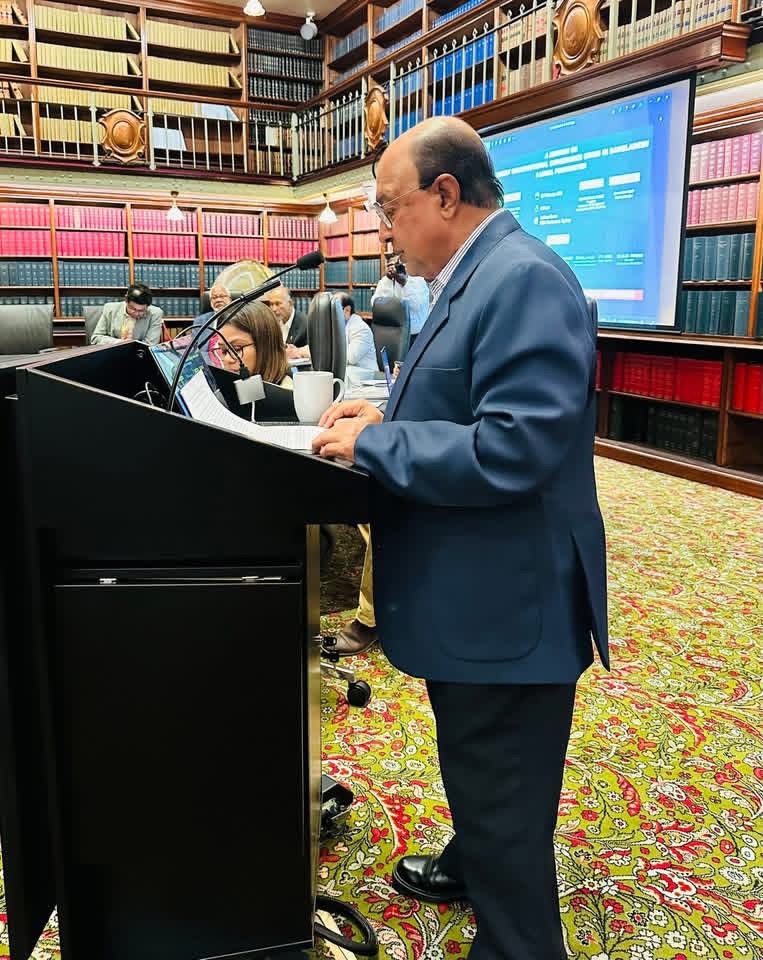
The keynote paper was presented by eminent jurist and Emeritus Professor of Law at Macquarie University, Professor M. Rafiqul Islam. In his presentation, Professor Islam analysed the constitutional and legal status of Bangladesh’s current interim government, assessed the legality of its major decisions, and examined their potential long-term impact on the country’s system of governance.
The abstract of the keynote paper noted that although Bangladesh began its journey as an independent nation with a democratic and accountable constitution in 1972, the country has since passed through multiple political phases, including parliamentary democracy, presidential rule, martial law, and various hybrid systems. Following the political upheaval of 2024, the formation and actions of the present interim government have given rise to serious new constitutional questions.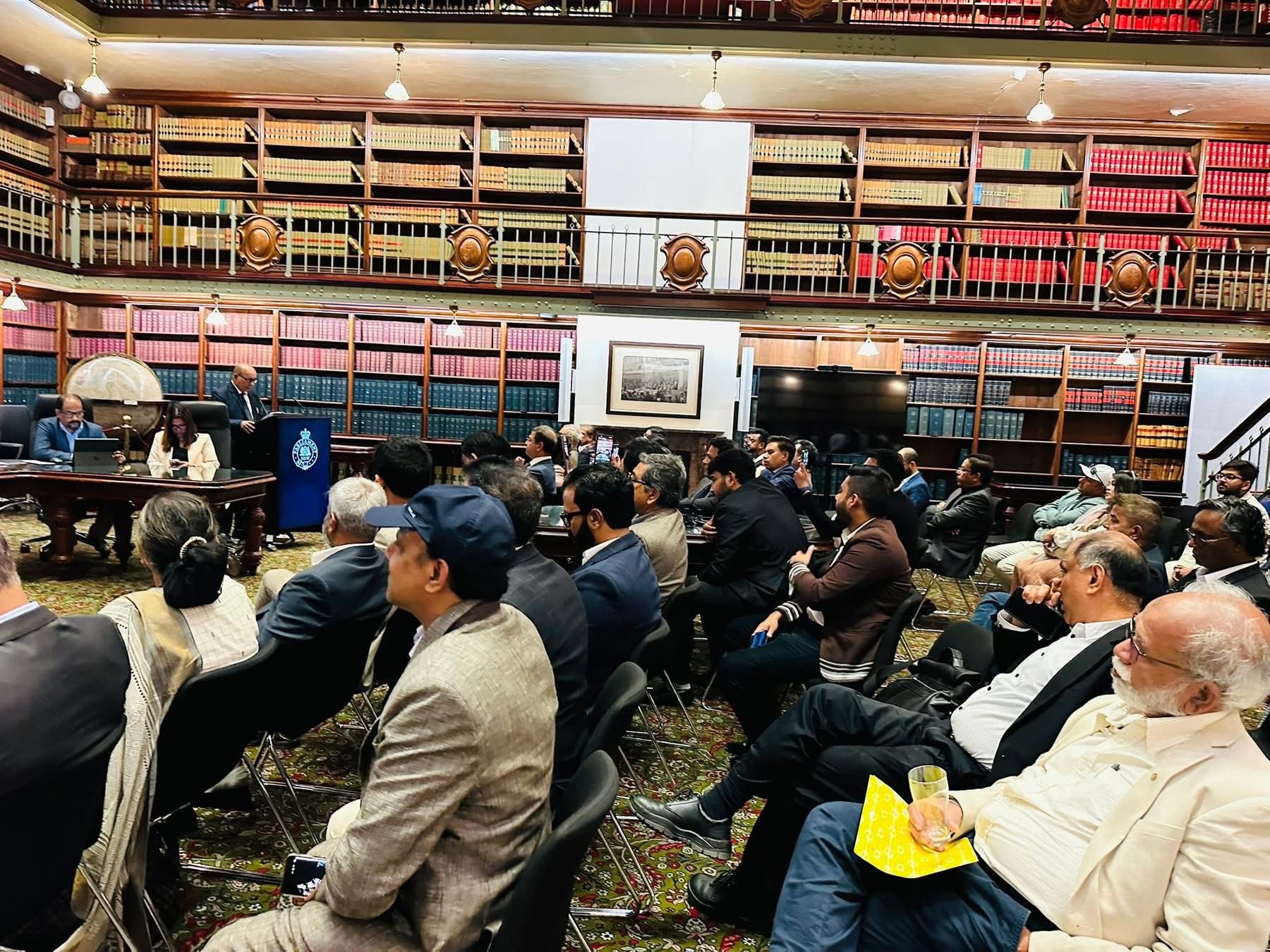
During his presentation, Professor Islam discussed the legal foundations of the interim government, the constitutional validity of its key executive actions, the July National Charter 2025, and the constitutional implications of a possible referendum. He also provided a broader analysis of the future of constitutional governance in Bangladesh.
The seminar was presided over by prominent lawyer Dr. Sirajul Haque, who described the event as an important intellectual platform for lawyers, academics, researchers, journalists, and expatriate Bangladeshis concerned with democracy, constitutionalism, and the rule of law.
In his welcome address, Dr. Haque said, “The NSW Parliament House is a symbol of democratic governance, accountability, and the rule of law. It is therefore a fitting venue for a discussion on constitutional governance.” He added that Bangladesh offers both a strong and cautionary example of constitutional development and decline.
Dr. Haque noted that although the 1972 Constitution was founded on strong democratic ideals, Bangladesh has experienced repeated constitutional instability since then. Military interventions, periods of martial law, and informal governments—often retrospectively validated by the courts—have profoundly affected the country’s constitutional order. This history, he said, raises a fundamental question: whether governance is conducted according to the constitution, or whether political necessity is later given legal justification.
Referring to the mass uprising of July 2024, Dr. Haque said Bangladesh has entered a new phase of constitutional uncertainty. “What is at stake is not merely political change, but constitutional authority itself,” he said. He highlighted key unresolved issues, including the legal source of the interim government’s authority, the limits of executive power without an electoral mandate, the role of the judiciary during constitutional breakdown, and the resilience of the constitution when exceptional powers are claimed.
Dr. Haque expressed particular concern over recent voting processes organised by the interim government, which he said do not conform to the letter or spirit of the constitution. Such actions, he warned, could entrench unconstitutional practices and set dangerous precedents for future governance.
He praised Professor Islam as one of the region’s most respected scholars of constitutional and international law, whose research has significantly influenced judicial thinking, legal practice, and policy debates across South Asia. He noted that Professor Islam has consistently argued that the constitution must not be treated as a tool of political convenience, especially during times of crisis.
Although the seminar focused on Bangladesh, Dr. Haque said the issues discussed have broader relevance for constitutional systems worldwide. Questions of legal legitimacy, unelected authority, and the supremacy of the constitution during crises, he said, are universal concerns.